0%

Picking the right Optical Line Terminal isn't just about which brand has the flashiest specs. Honestly, it's way more nuanced than that. If you're a global buyer, you've got to juggle your network goals, deal with local regulations that can be a real pain sometimes, and think about how things will hold up over the long haul. It's a lot to consider, but that's what makes it interesting.

You know, when you're picking an OLT, you really can't just look at the spec sheet and call it a day. Sure, it's gotta support the right PON standard, handle the subscriber load you're expecting, and have enough uplink speed to keep everyone happy. And yeah, it should play nice with the ONUs you already have and the fiber plant that's already in the ground – that's a given. But here's the thing nobody tells you: the little stuff matters way more than you'd think. Like, have you ever tried to fit a rack that's six inches too deep into a telecom closet that was clearly designed by someone who hates you? Or dealt with a unit that runs so hot you're basically running a sauna in the equipment room? Power redundancy, cooling, alarm visibility – those are the things that'll keep you up at night, not the flashy specs. So, in a real deployment, I've seen compact chassis work beautifully for a regional ISP, but if you're scaling up to a national network, you're probably going to want a modular platform that you can grow into. It's not a one-size-fits-all thing, honestly.

You know, from what we've seen in real-world field tests, specs alone just don't cut it. If you're a buyer, you've got to ask for things like interoperability tests, firmware policies, warranty terms, and actual documented performance numbers. There's also the vendor landscape – Nokia, Huawei, ZTE, Calix – they all have different platforms, support models, and ecosystems, so it's not a one-size-fits-all. And don't forget, what's available can differ from one market to another. But honestly, support is a huge deal – it matters a lot.

You might think you’re getting a deal with that low purchase price, but wait until you need spare parts and they take forever to arrive – or there’s no local engineer to help you out. So yeah, buyers should really look at the total cost, not just the sticker price. Getting some independent testing done, checking out what existing customers say, and making sure the documentation is clear – those things can really help you make a better call. But let's be real, no list of candidates is perfect. What works great in one country might need some tweaks somewhere else. Things like climate, the skill level of your workforce, how much room you have for installation, and even how subscribers behave – they all can change the final outcome. Alright, so if you're a buyer anywhere in the world looking to pick an Optical Line Terminal, this guide is basically your cheat sheet. We break down the real-world factors that actually matter, so you can make a choice with confidence—and dodge those annoying surprises that nobody sees coming.

What Is the Best Optical Line Terminal for Global Buyers?

What Is an Optical Line Terminal and Why Does It Matter?

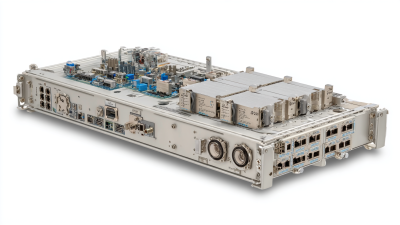
An optical line terminal (OLT) is the network’s control point for fiber access. It sits in a central office and connects the provider’s core network with many customer lines. Through passive optical network technology, one OLT port can serve multiple homes, offices, or public facilities. It manages downstream signals, upstream time slots, authentication, bandwidth profiles, and fault alerts.

The scale explains its importance. ITU’s Facts and Figures 2023 reported 5.4 billion internet users, representing 67% of the global population. Meanwhile, OECD Broadband Statistics for December 2023 showed fiber connections reached 42.9% of fixed broadband subscriptions across OECD economies. More users need steadier capacity. An OLT must therefore support efficient splitting, low latency, secure access, and smooth upgrades from older PON standards to faster generations.

A practical buying check starts with port density, optical reach, split ratios, and interoperability with optical network units. Power consumption matters in crowded equipment rooms. So does software quality; weak monitoring can turn a small fault into a neighborhood outage. Field experience also reveals a less comfortable truth: the highest port count is not always the best value. Local fiber distances, maintenance skills, climate, and expansion plans can change the answer. I would also question vendor performance claims unless independent testing, standards compliance, and documented service records support them.

Which OLT Standards and Network Architectures Should Buyers Compare?

Selecting the best optical line terminal starts with comparing standards, not cabinet appearance. GPON remains practical for basic residential access and moderate bandwidth. XG-PON supports higher downstream capacity, while XGS-PON provides symmetrical 10 Gbps service. That difference matters for cloud work, video production, and business customers. EPON and 10G-EPON may fit Ethernet-centered networks, especially where existing systems already use Ethernet operations. NG-PON2 offers multiple wavelengths, but its added optics and management complexity can increase deployment costs.

Architecture also changes the buying decision. FTTH usually delivers stronger long-term value than FTTB, but building access can be difficult. Point-to-point Ethernet offers clear bandwidth allocation, while passive optical networks reduce fiber and power requirements.

Buyers should compare split ratios, optical budgets, reach, subscriber density, uplink capacity, and redundancy options. A 1:64 split may suit a dense district, yet a 1:32 design can provide more optical margin in older infrastructure. Small details matter.

Interoperability needs careful testing. The OLT should support open management interfaces, standardized OMCI behavior, IPv6, VLAN control, QoS, and secure access policies. Check ONU compatibility with actual field devices, not only laboratory claims. Power consumption also deserves attention in hot or remote locations. A compact chassis may look efficient, but limited uplink slots can become a costly constraint later. Perfect comparison rarely exists. Local fiber conditions, technician skills, regulations, and growth forecasts should shape the final choice. My view may change after site testing, because paper specifications often hide installation realities.

How Do Capacity, Port Density, and Subscriber Support Differ?

What Is the Best Optical Line Terminal for Global Buyers?

How Do Capacity, Port Density, and Subscriber Support Differ?

Choosing an optical line terminal starts with traffic, not appearance. Capacity determines how many users can receive stable service during busy evening hours. A platform supporting higher-speed access can handle cloud applications, video calls, and residential streaming more comfortably. However, maximum capacity on a datasheet may not reflect real network performance. Uplink bandwidth, processing power, and oversubscription ratios also matter.

Port density affects installation space and expansion costs. A compact unit with many PON ports can serve more subscribers inside a crowded rack. For example, a 1:32 split may support fewer homes per port than a 1:64 design, but it can provide stronger optical margins. Higher density is not always better. Heat, power consumption, and maintenance access deserve equal attention. Technicians need enough room to replace modules without disturbing nearby connections.

Subscriber support should be measured beyond the total port count. Buyers should check VLAN handling, service profiles, remote monitoring, fault alerts, and compatibility with optical network terminals. Regional fiber distances and customer distribution can change the ideal configuration. Field teams often prefer simple management tools over complicated features they rarely use. That preference may seem conservative, but it reduces training errors. A careful evaluation should include simulated peak traffic and several months of expected growth. Estimates can be wrong. Planning for revision is part of responsible network design.

What Features Improve OLT Compatibility and Network Management?

For global buyers, the best optical line terminal supports more than one access standard. Look for GPON, XGS-PON, or hybrid ports that match local deployment plans. Standards-based OMCI improves communication between the OLT and optical network units. This reduces provisioning errors during installation. Interoperable SFP or SFP+ uplinks also simplify connections to existing switches and routers.

Network management features often determine long-term value. A clear web interface helps technicians inspect optical power, temperature, alarms, and ONU status. SNMP, streaming telemetry, and role-based access support remote teams across different time zones. VLAN mapping, QoS profiles, IPv6, and automatic ONU discovery make service activation more consistent. Keep configuration backups outside the device. Firmware support matters, too.

A field engineer should test compatibility before purchasing large quantities. Connect several ONU models, run bandwidth profiles, and observe recovery after a fiber interruption. Check whether alarms identify the affected port or only report a general failure. That distinction saves hours. Some systems advertise broad compatibility but perform poorly with mixed equipment. Real networks are rarely perfect. A small pilot may expose limitations that a datasheet hides. Power redundancy, replaceable fans, and clear event logs can also protect service continuity in crowded equipment rooms.

What Is the Best Optical Line Terminal for Global Buyers?

OLT compatibility and network management improve when equipment supports multiple access standards, open management interfaces, flexible transport functions, strong security, and service continuity features.

The chart counts representative open standards and protocol families relevant to global OLT selection: GPON, XG-PON, XGS-PON, 50G-PON, EPON, 10G-EPON, 25G/50G-EPON, OMCI, SNMP, NETCONF, RESTCONF, YANG, Ethernet, VLAN, LACP, SyncE, authentication, access control, encryption, redundancy, alarm management, and dual-image software support. A higher coverage count indicates broader compatibility and operational flexibility, not guaranteed product performance.

How Should Global Buyers Evaluate Reliability, Security, and Scalability?

The best optical line terminal depends on network conditions, not a product label. Global buyers should examine field experience, documented test results, and support quality. Ask for failure-rate data from similar deployments. Check performance during heat, dust, humidity, and unstable power. A reliable OLT should support redundant power, controlled cooling, alarms, and practical replacement procedures. Spare units should be available near the operating region. Response time matters.

Security needs equal attention. Review secure boot, signed firmware, role-based access, encrypted management, and detailed audit logs. Confirm whether updates remain available after installation. The supplier should explain its vulnerability-reporting process clearly. Compliance evidence should match the destination market and network environment. Standards support, such as relevant ITU-T or IEEE access specifications, helps, but it does not prove secure implementation. Request independent test reports and inspect the limits of each claim.

Scalability is more than port count. Evaluate support for current and future PON technologies, subscriber growth, uplink capacity, telemetry, and centralized management. Ask whether licenses, controller features, or software upgrades create unexpected costs. Test interoperability with existing optical modules and customer equipment before purchase. A pilot deployment can reveal latency, provisioning errors, and recovery delays that brochures rarely mention. No checklist is perfect. Buyers may still underestimate training, regional spare parts, or integration work. That gap deserves honest budgeting.

What Is the Best Optical Line Terminal for Global Buyers? — How Should Global Buyers Evaluate Reliability, Security, and Scalability?
Evaluation Dimension GPON XG-PON XGS-PON Buyer Evaluation Guidance Recommended Weight
Downstream Line Rate 2.488 Gbit/s 9.953 Gbit/s 9.953 Gbit/s Choose according to peak traffic, subscriber growth, and the expected life of the access network. 12%
Upstream Line Rate 1.244 Gbit/s 2.488 Gbit/s 9.953 Gbit/s XGS-PON provides symmetrical capacity and is better suited to cloud applications, business access, video production, and high upstream demand. 12%
Typical Passive Split Design 1:32 to 1:64 1:32 to 1:64 1:32 to 1:64 Split ratio is determined by optical loss, cable distance, service-level requirements, and the selected optical budget. Higher split ratios reduce available bandwidth per subscriber. 8%
Nominal Reach Up to 20 km in common deployments Up to 20 km in common deployments Up to 20 km in common deployments Verify the optical class, loss budget, connector losses, fiber route, and coexistence requirements rather than relying only on a headline distance. 8%
Standardization ITU-T G.984 series ITU-T G.987 series ITU-T G.9807.1 Products based on established ITU-T standards generally provide better interoperability and a broader equipment ecosystem. 8%
Encryption and Access Security Downstream AES encryption; ONU authentication supported AES-based traffic encryption; ONU authentication supported AES-based traffic encryption; ONU authentication supported Confirm encryption activation, key management, management-plane protection, role-based access, secure protocols, and audit-log retention. 15%
Management and Provisioning OMCI-based service management OMCI-based service management OMCI-based service management Assess zero-touch provisioning, profile templates, firmware control, configuration backup, alarms, telemetry, and northbound API support. 10%
Reliability and Resilience Depends on platform design Depends on platform design Depends on platform design Request evidence of redundant power, control modules, uplinks, cooling, alarm handling, mean time between failures, and field-replacement procedures. 15%
Migration Capability Baseline access layer Can support higher-speed migration Can coexist with legacy PON in suitable optical plans A strong migration path can reduce civil-work costs by reusing outside-plant fiber, splitters, cabinets, and customer premises infrastructure where compatible. 10%
Operational Scalability Suitable for basic broadband growth Suitable for multi-gigabit upgrades Suitable for symmetrical multi-gigabit services Evaluate chassis capacity, PON-port density, uplink capacity, subscriber scale, software licensing, and expansion without service interruption. 12%
Best-Fit Use Case Cost-sensitive residential broadband and mature networks Downstream-heavy multi-gigabit access New high-capacity networks and symmetrical services The best choice depends on total cost of ownership, not only the initial hardware price. —
Minimum Verification Evidence Standards compliance documents, interoperability results, optical-budget calculations, security feature list, environmental test data, failure-recovery test results, firmware policy, and regional support commitments Require documented evidence and a controlled proof of concept before large-scale procurement. 13%
Practical decision rule: Select GPON when current demand and budget are the primary constraints; select XG-PON when downstream capacity is the main upgrade requirement; select XGS-PON when symmetrical multi-gigabit services, long-term scalability, and network convergence are priorities. Actual performance depends on optical budget, split ratio, subscriber behavior, uplink design, and platform implementation.

What Costs and Deployment Factors Shape the Best OLT Choice?

What Is the Best Optical Line Terminal for Global Buyers?

The best OLT choice depends on total deployment cost, not the equipment price alone. A realistic budget includes chassis capacity, line cards, optical modules, software licenses, power use, rack space, installation, and technical support. In field planning, these hidden items often change the preferred design.

Subscriber density should guide port capacity and split ratios. A rural network may need longer optical reach, stronger temperature tolerance, and fewer ports per site. An urban rollout may prioritize compact hardware, high port density, and simple expansion. Check upstream capacity carefully. Busy evening traffic can expose a weak design quickly.

Redundancy also affects cost. Dual power supplies and protected uplinks improve service continuity, but they require extra hardware and energy. Local labor rates, import duties, spare-part access, and regional compliance can reshape the budget. Interoperability matters too. Confirm optical standards, management protocols, and migration support before ordering. A low-cost OLT may create expensive integration work later.

Do not size only for today.

Leave practical room for growth. Yet excessive capacity ties up capital and may remain unused for years.

A careful buyer should compare three scenarios: initial launch, expected growth, and failure recovery.

Real network conditions are rarely perfect. Forecasts can be wrong, especially where customer demand changes faster than construction schedules.

How the FTTH Fiber Optical Line Terminal Mini GPON OLT with 4 PON Ports Enhances Fiber Networks

The FTTH Fiber Optical Line Terminal Mini GPON OLT with 4 PON Ports offers a compact and practical way to expand modern fiber networks. With four PON ports, the OLT-G4V can connect multiple optical distribution branches while supporting reliable high-speed access for homes, offices, and small-to-medium deployments. Its mini design helps save rack or cabinet space, making installation more flexible where network equipment must remain compact. The unit also supports ONU devices from any brand, giving operators greater freedom when planning or upgrading their access infrastructure.

Network operation is simplified through EMS, Web, Telnet, and CLI management options. Administrators can select the interface that best matches their workflow, whether they need visual configuration, remote maintenance, or command-based control. The device also provides multiple security guarantees covering users, equipment, and the network itself. These features help strengthen access control, protect management operations, and support stable service delivery across the FTTH environment. With a minimum order quantity of one unit, it can also suit pilot projects, replacement needs, and gradual network expansion.

FAQS

What is an optical line terminal?

An optical line terminal controls fiber access from a central network location. It connects the core network with many customer lines. It manages signals, bandwidth, authentication, timing, and fault alerts. Think of it as traffic control for fiber.

Why does an optical line terminal matter?

More users need stable capacity for streaming, cloud work, and video calls. One terminal can serve homes, offices, and public facilities through passive fiber splitting. Poor monitoring can turn one small fault into a neighborhood outage. That risk is easy to underestimate.

Which access standards should buyers compare?

GPON suits basic residential service and moderate traffic. XG-PON supports higher downstream speeds. XGS-PON provides symmetrical 10 Gbps service for demanding users. EPON and 10G-EPON fit Ethernet-centered networks. NG-PON2 offers multiple wavelengths but adds optical and management complexity.

How should buyers compare network architectures?

FTTH usually offers stronger long-term value than FTTB. Building access may still make FTTB easier in some locations. Point-to-point Ethernet provides clear bandwidth allocation. Passive optical networks can reduce fiber use and equipment power. Local conditions decide the practical answer.

What split ratio should a network use?

A 1:64 split can serve many users in a dense district. A 1:32 split usually provides more optical margin. Older cables may benefit from the smaller split. The higher ratio is not automatically better. Measure distance, loss, and subscriber density first.

How do capacity and port density affect costs?

Capacity affects service quality during busy evening hours. Port density affects rack space, expansion, and installation work. A compact terminal may serve many subscribers. However, heat and power consumption can increase. More ports can create more maintenance pressure.

What compatibility checks are important?

Test the terminal with actual optical network units used in the field. Check standardized management behavior, VLAN control, IPv6, and quality policies. Confirm uplink capacity and remote monitoring functions. Laboratory compatibility alone may not predict field performance. Site testing can change my opinion.

What should technicians examine before installation?

Check optical reach, split ratios, power limits, and available rack space. Leave room for module replacement and cable movement. Review climate, cooling, and maintenance skills at the site. Simulate peak traffic and future growth. Estimates can be wrong. Plan for revision.

Conclusion

Choosing the best Optical Line Terminal requires more than comparing price or port counts. An OLT serves as the central connection point between a service provider’s access network and subscribers, so buyers should first examine compatible standards, architecture options, and support for technologies such as fiber-to-the-home and enterprise access. Capacity, uplink bandwidth, port density, subscriber limits, and upgrade flexibility are essential for matching current demand while preparing for future growth.

Global buyers should also evaluate management interfaces, monitoring tools, interoperability, automation, and compatibility with existing optical network units. Reliability features, redundancy, access controls, firmware management, and operational security can reduce downtime and simplify long-term maintenance. Finally, the best choice depends on the complete deployment picture, including equipment cost, power consumption, installation complexity, regional support, training, warranty coverage, and total ownership expenses. A balanced assessment of performance, scalability, compatibility, and lifecycle value will lead to a more practical and sustainable OLT investment.

Isabella

Isabella

Isabella is a dedicated marketing professional at Hangzhou Sofitel Optoelectronic Equipment Co., Ltd., where she excels in promoting the company's advanced optoelectronic products. With a deep understanding of the industry, Isabella consistently showcases her expertise through insightful blog......
Previous 2026 Best FTTH WDM Optical Receivers for Global Buyers