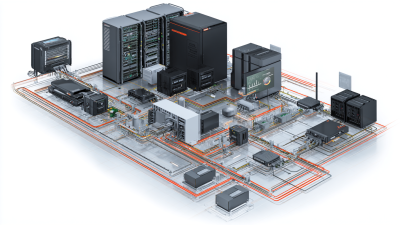
In today’s fast-changing world of telecommunications, it’s pretty clear that efficient data transfer is more important than ever. Leading the charge in this tech revolution are Optical Node Terminals, or ONTs — these little devices are crucial for providing high-speed internet and making our networks run smoothly. As more people want faster, more reliable connections, ONTs have become a key piece of the puzzle. They’re what help deliver seamless communication and keep up with the growing demand for better online experiences.
Basically, ONTs act as the middlemen in fiber-optic networks. They connect the fiber cables to your devices, converting optical signals into electrical signals and the other way around. That’s how data gets shared across different platforms — whether you’re streaming HD videos, gaming online, or working remotely. Understanding how ONTs work and what they’re made of is super important for anyone involved in networking — it’s the foundation for building smarter, faster systems in the future. When you really get into what they do, it’s obvious that ONTs aren’t just simple parts—they’re essential for powering our digital lives and making modern tech happen.

Overview of Optical Node Terminals in Networking
Optical node terminals play a crucial role in modern networking by acting as vital points where optical signals are converted and managed. These devices facilitate the transmission of data over long distances by converting optical signals to electrical signals, and vice versa. This conversion allows for multiple types of services to be delivered, including voice, data, and video, effectively handling the vast amounts of information that flow through networks today.
Tips for optimizing performance with optical node terminals include ensuring proper installation and maintenance. Regular checks on the optical fibers connected to the terminals can prevent signal loss and degradation. Additionally, using quality components and equipment, such as connectors and splitters, can enhance the overall effectiveness of optical networks and maintain data integrity.
Another important aspect is monitoring the throughput and latency of the data being processed by these terminals. By implementing performance measurement tools, network administrators can identify bottlenecks and areas for improvement. Keeping the firmware and software updated will also help in maximizing efficiency and security within the network infrastructure, ensuring that optical node terminals continue to operate at their best.
Key Components of Optical Node Terminals
Optical node terminals are crucial components in modern networking, facilitating high-speed data transmission across extensive distances. These terminals serve as the junctions where optical signals are received, converted, and transmitted, employing various key components for efficient operation. A primary element is the optical transceiver, which plays a vital role in transforming electrical signals into optical signals and vice versa. This component ensures that data can travel swiftly through fiber optic cables, maintaining signal integrity over long distances.
Another essential component is the optical amplifier, which bolsters the strength of signals as they traverse networks, preventing loss of quality and ensuring sustained performance. Additionally, multiplexers and demultiplexers help manage multiple wavelengths of light, allowing for efficient use of bandwidth by combining or separating signals. This capability is particularly significant in environments where data demand is high, as it maximizes throughput while minimizing cost.
Tips: When setting up optical node terminals, always consider the quality of your optical transceivers and amplifiers, as they directly impact overall network performance. Regular maintenance and upgrades can also enhance efficiency and longevity, keeping your networking infrastructure robust and responsive to future demands.
Functions of Optical Node Terminals in Data Transmission
Optical node terminals play a vital role in modern networking, particularly in data transmission. These terminals serve as key components in fiber optic networks, facilitating the conversion of optical signals into electrical signals and vice versa. By enabling high-speed data transfer across vast distances with minimal loss, optical node terminals ensure that information travels efficiently from one point to another. They are essential in amplifying and regenerating signals, which is crucial for maintaining the integrity of data over long distances.
When it comes to data transmission, understanding the functions of optical node terminals can provide insights into their operational significance. These terminals not only support high bandwidth capabilities but also enhance the network's reliability by balancing the load and preventing bottlenecks. They can manage multiple connections, allowing various data streams to be transmitted simultaneously without compromising performance.
Tip: Regularly monitor the status of your optical node terminals to ensure optimal performance and prevent potential disruptions in data transmission. Additionally, keeping firmware and software up to date can enhance functionality and security.
Another important aspect is their scalability. Optical node terminals can be easily integrated into existing networks, supporting the expansion of services as demand grows. This adaptability is crucial for businesses and providers aiming to future-proof their networks against increasing data traffic generated by emerging technologies.
Tip: Consider the bandwidth requirements and traffic patterns in your network when evaluating the placement and configuration of optical node terminals for maximum efficiency.
Understanding Optical Node Terminals and Their Role in Modern Networking
| Feature |
Description |
Importance |
Typical Use Cases |
| Data Transmission |
Converts optical signals to electrical signals for data processing. |
Enables efficient data transfer across networks. |
Internet Service Providers, Telecommunication firms. |
| Signal Amplification |
Amplifies weak optical signals to maintain signal integrity. |
Prevents data loss over long distances. |
Long-haul networks, Metro networks. |
| Signal Regeneration |
Restores the original signal quality for transmission. |
Enhances transmission quality in fiber optic networks. |
Data centers, Cloud services. |
| Network Management |
Monitors and manages optical network performance. |
Ensures reliable operation and troubleshooting. |
Telecommunications management, Service monitoring. |
| Protocol Conversion |
Facilitates communication between different network protocols. |
Enhances interoperability between systems. |
Enterprise networks, Hybrid IT environments. |
Integration of Optical Node Terminals in Fiber Optic Networks
Fiber optic networks have become the backbone of modern data communications, and optical node terminals (ONTs) play a pivotal role in this ecosystem. ONTs serve as critical connection points that facilitate the transition of optical signals to electronic signals, enabling high-speed internet, television, and voice services to consumers. According to a report by the International Telecommunication Union (ITU), the deployment of fiber-optic networks has seen an exponential increase, with a projected growth of over 35% in global fiber subscriptions by 2025. This underscores the importance of efficient ONT integration within these networks to handle the escalating demand for bandwidth.
The integration of optical node terminals into existing fiber optic infrastructure not only enhances service delivery but also promotes scalability. As data traffic continues to rise, driven by increasing streaming services and IoT applications, the ability of ONTs to support higher throughput and ensure low latency becomes crucial. The Fiber Broadband Association (FBA) notes that fiber-to-the-home (FTTH) connections provide average download speeds exceeding 1 Gbps, significantly outperforming traditional copper lines. Effective deployment strategies and cutting-edge ONT technologies are essential for network operators aiming to optimize their fiber networks and accommodate growing consumer needs efficiently. The focus on integrating ONTs seamlessly into these networks will play an essential role in shaping the future of telecommunications.
Optical Node Terminals in Fiber Optic Networks
This chart illustrates the distribution of different types of optical node terminals used in modern fiber optic networks, showcasing their respective market shares in percentages.
Comparative Analysis: Optical Node Terminals vs. Traditional Routers
In modern networking, Optical Node Terminals (ONTs) have emerged as a significant alternative to traditional routers, particularly in environments that require high data throughput and low latency. Unlike routers, which primarily route data packets based on IP addresses, ONTs operate by converting optical signals transmitted over fiber optic cables into electrical signals that can be understood by end devices. This fundamental difference allows ONTs to support greater bandwidth and faster internet speeds, essential for services like streaming, gaming, and cloud computing.
When comparing ONTs to traditional routers, one important aspect is their capacity for handling large volumes of data. Traditional routers can become bottlenecks when managing extensive network traffic, especially as users increase their bandwidth needs. ONTs can efficiently manage multiple connections simultaneously, significantly reducing latency and enhancing the user experience. Additionally, ONTs typically require less physical space and energy compared to bulkier router setups, making them a more sustainable option for network infrastructure. As organizations continue to seek faster, more reliable internet connections, the shift towards optical technology becomes increasingly evident, showcasing the advantages of ONTs in contemporary networking solutions.
Challenges and Limitations of Optical Node Terminals
Optical node terminals (ONTs) are vital components in modern networking, particularly in fiber-optic communication systems. They serve as the endpoint for optical fibers, converting digital signals into light pulses and vice versa. However, as networks expand and demand for higher data throughput increases, a number of challenges and limitations have emerged relevant to ONTs. One significant challenge is their susceptibility to physical and environmental factors. Factors such as extreme temperatures, humidity, and physical interference can affect their performance and reliability. According to a report by the International Telecommunication Union, approximately 30% of reported service outages in fiber networks can be traced back to failures at optical node terminals.
Another limitation stems from the scalability of ONTs. As user demands for bandwidth increase with the rise of high-definition streaming and cloud services, the existing infrastructure of optical networks may struggle to keep pace. A study published by Broadband Communities indicates that telecommunications providers often face difficulties in upgrading or expanding ONT capacity in real time, with up to 60% of operators reporting challenges in swiftly adapting their networks to meet demand. Furthermore, cost considerations also play a role; while ONTs are economically viable in the short term, the long-term maintenance and upgrade costs can pose significant burdens, particularly for smaller service providers operating on thin margins. These challenges underscore the need for ongoing innovation and investment in the optical networking sector.
Future Trends in Optical Node Technology and Networking
As the demand for high-speed internet connectivity continues to surge, the role of optical node technology in modern networking is becoming increasingly vital. According to a report by Research and Markets, the global optical communication market is projected to grow at a compound annual growth rate (CAGR) of 9.6% from 2023 to 2028. This growth is largely driven by the proliferation of broadband technology and the increasing reliance on data-intensive applications such as cloud computing and video streaming. Optical node terminals, which facilitate the distribution of optical signals, are integral to meeting this burgeoning demand.
Future trends in optical node technology are leaning towards enhanced scalability and adaptability to dynamic network conditions. The integration of machine learning and artificial intelligence into these systems is anticipated to optimize performance and enhance network management. In addition, advancements in passive optical network (PON) technology are expected to further revolutionize telecommunications infrastructure by supporting higher data rates and greater bandwidth. Reports indicate that by 2025, over 50% of new broadband connections will utilize PON, reflecting the industry's shift towards more sustainable and efficient networking solutions. As optical node technology evolves, its influence on the architecture of future networks is poised to be profound, enabling faster, more reliable, and secure communications for a connected world.
The Ultimate Guide to Choosing the Right 5G Wireless Data Terminal: CPE-1841 Review and Recommendations
When it comes to choosing the right 5G wireless data terminal, the CPE-1841 stands out as an exceptional option. This model is engineered to meet the increasing demands of connectivity, supporting various quality of service protocols such as WMM-PS QoS, ensuring that your streaming and online activities remain smooth and uninterrupted. Additionally, the device's compatibility with Wi-Fi Direct and Miracast R2 enhances its versatility, allowing for seamless connections among multiple devices without the hindrance of a traditional network setup.
In terms of performance, the CPE-1841 excels with features that support advanced functionalities like background scanning and efficient handling of ARP and TCP/UDP checksum offload. This means that users can enjoy improved network efficiency and reduced latency, while the support for IPv6 NS and RA offloading prepares the terminal for future connectivity requirements. Furthermore, compliance with the IEEE 802.11 standards guarantees robust and secure wireless communication, making the CPE-1841 a reliable choice for both personal and professional use. This combination of features not only ensures exceptional performance but also future-proofs your investment in wireless technology.
FAQS
: Optical node terminals convert and manage optical signals, facilitating the transmission of data over long distances by converting optical signals to electrical signals and vice versa.
Performance can be optimized by ensuring proper installation and maintenance, regularly checking optical fibers, using quality components, and keeping firmware and software updated.
Key components include optical transceivers, optical amplifiers, multiplexers, and demultiplexers, all of which help in managing and transmitting signals efficiently.
The optical transceiver transforms electrical signals into optical signals and vice versa, ensuring swift data travel through fiber optic cables.
Signal amplification prevents loss of quality and ensures sustained performance as signals traverse networks, which is crucial for high-speed data transmission.
They manage multiple wavelengths of light, allowing for efficient bandwidth use by combining or separating signals, maximizing throughput, and minimizing costs.
Regular maintenance should include checks on optical fibers, upgrades of components, and performance measurements to identify bottlenecks and improve efficiency.
Monitoring throughput and latency helps network administrators identify performance issues and optimize the network for better efficiency and reliability.
Using quality components, performing regular checks, and updating system software can greatly enhance data integrity and overall network performance.
Keeping firmware and software updated maximizes efficiency and security, ensuring that optical node terminals operate at their best.
Conclusion
The article "Understanding Optical Node Terminals and Their Role in Modern Networking" provides a comprehensive overview of Optical Node Terminals (ONTs) and their vital role in contemporary data transmission systems. It delves into the key components that make up ONTs, illustrating how they facilitate high-speed communication by converting optical signals into electronic data. The discussion highlights the essential functions of Optical Node Terminals in fiber optic networks, including their integration into existing infrastructures and their advantages over traditional routing devices.
Furthermore, the article critically examines the challenges and limitations faced by Optical Node Terminals, such as scalability and deployment costs. It also explores future trends in optical node technology, emphasizing the potential for enhanced performance and efficiency in networking. Ultimately, this analysis underscores the significance of Optical Node Terminals in advancing data transmission technologies and shaping the future of network communications.