

Enterprise data centers are undergoing a reconstruction at an unprecedented pace. AI computing workloads, cloud-native applications, virtualization technologies, and edge computing have driven rack densities and network speeds to unprecedented levels. In infrastructure planning, computing power and switching capacity are often the focus, while interconnect cabling is frequently overlooked.
These trends have exposed severe cabling management challenges in data centers that were not originally designed for today’s high-density environments. Many common issues related to performance, cooling, and reliability do not stem from servers or switches themselves but from the cables connecting these devices. Problems such as limited performance, poor heat dissipation, and overall instability often originate from disorganized, complex cabling. Poor cabling management can obstruct airflow, create hot spots, complicate maintenance, and ultimately result in costly downtime.
In L-com’s data center solution ecosystem, cabling is no longer a passive, ancillary component but a critical risk control point. Signal attenuation, airflow blockage, cable stacking, and operational complexity can quietly degrade system performance and stability. However, in most modern data centers, cabling does not become a bottleneck in actual operations.
1. Why Data Center Density Growth Outpaces Interconnect Planning
Currently, enterprise data centers operate in a complex environment, with the demand for operational efficiency reaching historic highs. As enterprises increasingly rely on data-driven strategies, the market demand for high-performance infrastructure has surged. Emerging technologies such as AI clusters, high-speed switching, and advanced virtualization fundamentally alter the data center operating environment. These innovations not only increase rack power consumption and port density but also significantly increase the volume of data flowing through the data center.
With these technological advances, data centers are no longer merely storage facilities—they have evolved into core hubs for massive data processing, requiring network operations teams to rethink infrastructure management.
However, as rack densities increase, network teams face significant deployment challenges. To accommodate higher transmission rates and port counts, operations teams must deploy large numbers of shielded Ethernet cables and fiber components, often without re-planning cable pathways or overall cabling schemes.
2. Cabling Management Challenges in Data Centers
Cabling management is one of the most common and easily overlooked challenges in modern data centers. With the deployment of high-density racks, high-speed networks, and complex hybrid architectures, cable volumes grow explosively. Without a systematic cable management plan, data centers can experience blocked airflow, reduced cooling efficiency, and increased operational risk. These problems are particularly pronounced in data centers supporting AI workloads, cloud infrastructure, and critical enterprise systems.
Primary cabling challenge: airflow obstruction.
Messy cables in trays, underfloor pathways, or racks block cold air circulation, causing heat accumulation around servers and switches, creating localized hot spots. This not only increases the burden on cooling systems but accelerates equipment aging. Using structured cabling methods with horizontal and vertical cable managers ensures proper airflow and reduces heat accumulation.
Disorganized cabling also severely impacts expansion and operational efficiency. As networks scale, tracing connections in dense, tangled cable bundles is time-consuming, error-prone, and can lead to accidental disconnections during upgrades or troubleshooting. Standardized solutions, such as clearly labeled patch panels, help maintain organized cabling while supporting future expansion.
Signal interference and performance degradation are also common issues. Mixed cabling of power, Ethernet, and RF/coaxial cables without proper separation increases electromagnetic interference (EMI), leading to packet loss, reduced network speeds, and intermittent connectivity issues that are difficult to diagnose. Proper deployment of shielded Ethernet cables and optimized routing layouts can maintain signal integrity even in complex electromagnetic environments.
3. Why Cable Stacking Creates Hidden Performance Risks
In high-density cabling environments, cable stacking is a major issue, often underestimated despite its significant impact on system performance and stability. Tightly bundled copper and fiber cables can stress cable jackets and connectors, especially in scenarios using flexible cables or industrial Ethernet, where vibration or frequent rack maintenance occurs. Excessive physical tension can compromise structural integrity and, over time, cause performance degradation.
If high-density copper and fiber cables are tightly bundled without professional cable management accessories, issues such as exceeding bend radius limits or connector fatigue can occur. During relocations, expansions, or network modifications, troubleshooting time also increases significantly.
4. Signal Attenuation in High-Density Environments
High-density network layouts pose major challenges to signal integrity. To save space, cable counts increase and routing becomes denser, elevating EMI and crosstalk risks. This is particularly pronounced in copper cabling networks, where cables placed too close together are prone to abnormal signal attenuation.
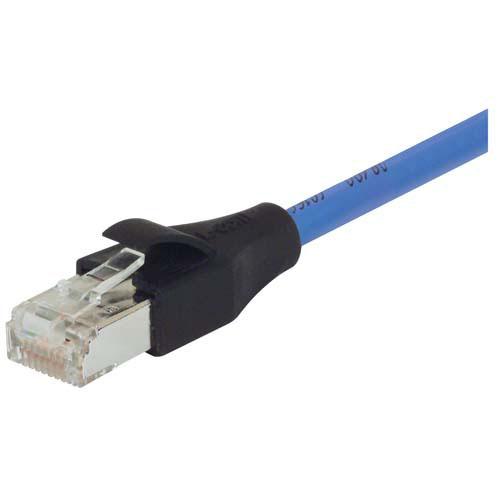
Using shielded, flame-retardant Category 5e cables with RJ45 connectors and CMP-rated outer jackets is recommended. Shielded or double-shielded Ethernet cables reduce interference, and LSZH (low smoke zero halogen) or CMP-rated cables ensure compliance in confined or airflow-sensitive environments.
5. Cable Impact on Cooling and Airflow Efficiency
Data centers rely on unobstructed airflow to cool servers and equipment effectively, making proper cooling design essential. Messy or stacked cables can block airflow. Bundles of cables behind racks or under raised floors hinder the flow of hot and cold air, resulting in uneven cooling, localized overheating, and insufficient cooling capacity.
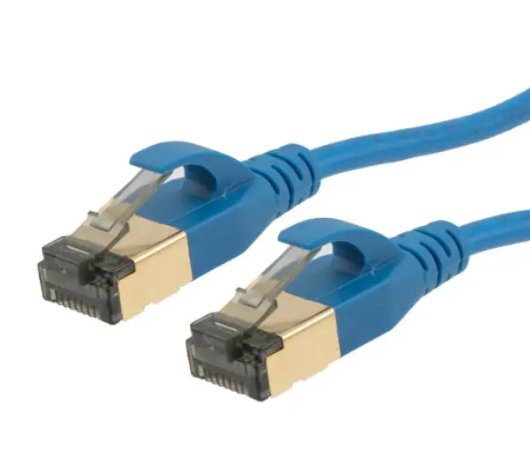
Using fine-gauge, Category 7 10G Ethernet cable assemblies (RJ45 male-to-male, U/FTP shielded twisted pair, 32AWG stranded conductors, CM-rated PVC jackets) combined with structured routing can maintain transmission performance while optimizing airflow, reducing cooling loads without modifying mechanical systems.
6. Cabling Is No Longer Just a Physical Detail
In modern enterprise data centers, the physical layer not only determines system uptime but also affects operational efficiency and future scalability. Thoughtful interconnect selection at the foundational level impacts signal integrity, cooling effectiveness, maintenance speed, and overall infrastructure scalability. With data demands continually increasing, proper cabling management and routing planning are critical. A well-designed cabling system optimizes airflow, reduces overheating risk, and ensures high-speed, stable data transmission. Enterprises must recognize that cabling decisions have long-term operational and business implications.
While high-density data centers offer advantages in efficiency and space utilization, they also introduce significant interconnect risks. Achieving proper cooling, stable power delivery, and reliable network transmission in tight spaces requires careful planning and robust supporting infrastructure. As data demand grows, operators must implement risk mitigation strategies, including regular assessment and upgrades of interconnect systems.
7. FAQ
Q1: What are the biggest cabling management challenges in modern data centers?
The primary challenges include cable stacking, airflow obstruction, signal interference, and limited scalability. As rack density increases, messy cabling can block cooling pathways, exacerbate EMI, and increase operational errors.
Q2: How does cable stacking affect cooling efficiency?
Stacked cables obstruct airflow at both the rack and data center levels. Excessive cabling behind racks or under raised floors blocks cold air from entering device inlets and causes hot air recirculation.
Q3: Are shielded Ethernet cables necessary in high-density data centers?
Yes. Shielded and double-shielded Ethernet cables are strongly recommended. Bundled copper cables in high-density setups significantly increase electromagnetic interference and crosstalk.
Post time: Mar-26-2026