

1Start With the Network Architecture
Before comparing individual products, it is important to understand what the network is expected to provide.
A typical FTTH deployment may include an OLT at the central office, fiber distribution equipment in the access network, ONUs or ONTs at the customer side, and wireless routers for indoor connectivity.
The requirements can be different for a residential broadband project, an apartment building, a hotel, or a small business network. A system serving hundreds or thousands of users may require a different OLT configuration from a smaller deployment.
This is why network architecture should be considered before equipment specifications.
2Select the Right FTTH OLT
The OLT is one of the key devices in a passive optical network. It connects the operator's core network with multiple optical terminals on the access side.
When selecting an FTTH OLT, buyers should look at several factors, including PON port quantity, uplink capacity, supported PON technology, management functions, and future expansion requirements.
For smaller projects, a compact OLT may be sufficient. Larger deployments may require more PON ports and higher-speed uplinks.
Softel offers EPON, GPON, 10G EPON and XG(S)-PON OLT products, giving network operators different options when planning fiber access networks. The company's product range includes models with 10G SFP+ uplinks as well as higher-capacity configurations.
3Consider GPON, EPON or XGS-PON Requirements
Different PON technologies are designed for different network requirements.
GPON remains a widely used option for FTTH deployments where stable broadband access and mature equipment are important. EPON is also used in many access networks, while XG-PON and XGS-PON provide higher bandwidth for networks that need to support increasing data traffic.
The right choice depends on factors such as:
- Required bandwidth
- Number of subscribers
- Existing network infrastructure
- Budget
- Upgrade plans
- Compatibility with customer-side equipment
For this reason, buyers should avoid selecting a PON system based only on the maximum theoretical speed. The entire network needs to work together.
4Don't Ignore the ONU and Home Network
The optical access network is only one part of the user experience.
An ONU or ONT connects the customer's premises to the fiber network. If the wireless equipment inside the building cannot handle the available bandwidth, upgrading the optical access side alone may not produce the expected result.
For modern deployments, WiFi 6 Router products can be considered when higher wireless capacity, better device handling, and improved network efficiency are required.
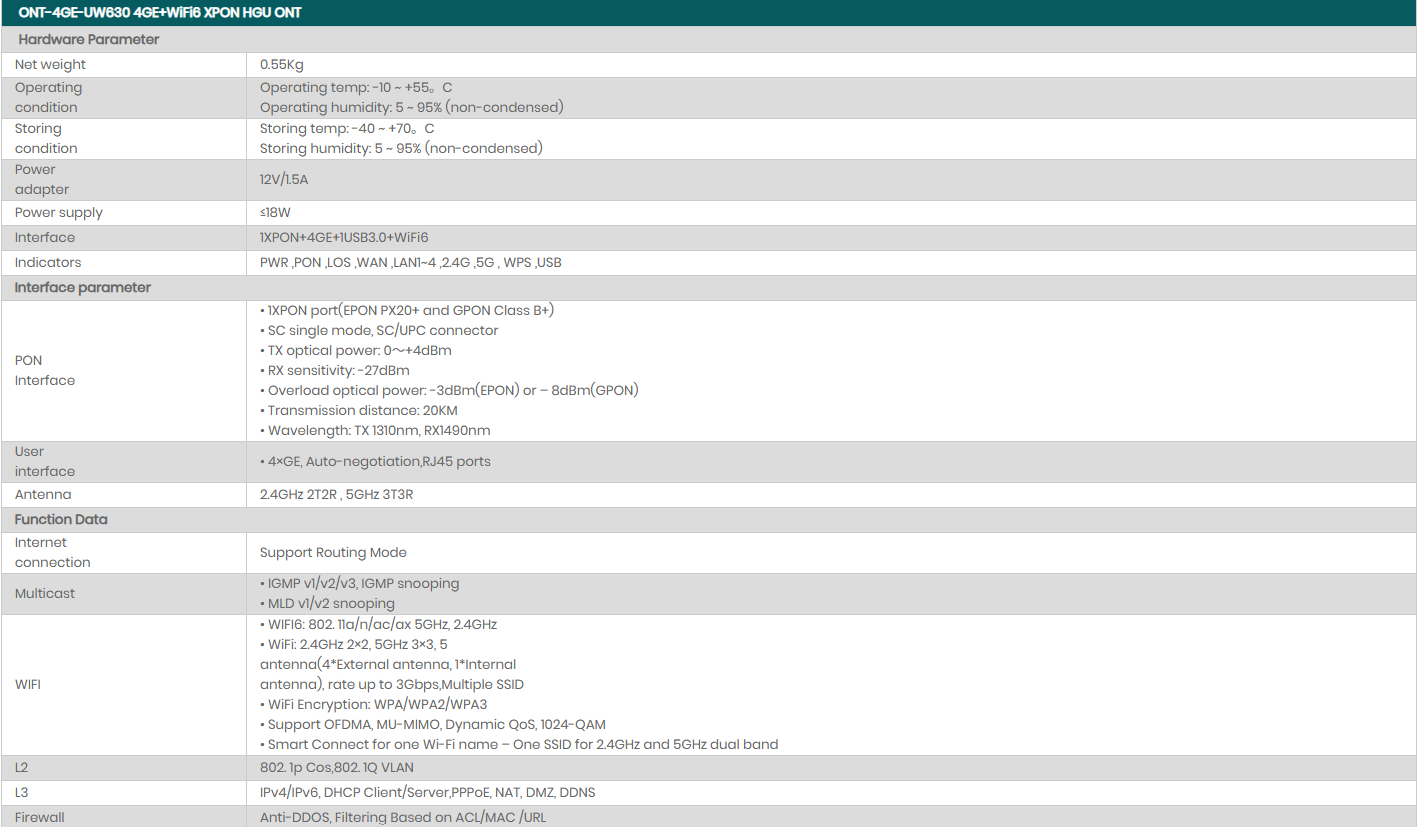
Softel's current portfolio includes WiFi 5, WiFi 6, Mesh Router, CPE and XPON ONU products. Some XPON ONU models combine fiber access with dual-band WiFi, while the router range includes AX3000 WiFi 6 models and other Gigabit wireless products.
This type of integrated approach can simplify network deployment for ISPs and system integrators.
5. Think About Future Expansion
A fiber network is usually expected to operate for years, so today's requirements should not be the only consideration.
For example, a project may initially require GPON, but subscriber bandwidth and traffic demand could increase over time. If the network architecture has no room for expansion, upgrading later may require additional equipment and installation work.
When evaluating Fiber Optic Network Equipment, buyers should therefore pay attention to:
- ✓ Available PON ports
- ✓ Uplink interfaces
- ✓ Network management
- ✓ Compatibility with existing equipment
- ✓ Support for future PON upgrades
- ✓ Hardware scalability
A network that can be upgraded step by step may be more practical than one designed only around today's requirements.
6. Choose a Supplier That Understands the Complete Network
For B2B buyers, the equipment supplier is also an important part of the project.
A supplier that only provides individual devices may not be able to help when different products need to work together. By contrast, a supplier with a broader product range can provide equipment for different parts of the access network.
Softel was established in 2005 and focuses on CATV, HFC and optical fiber communication equipment. Its current product portfolio covers PON OLT/ONU, FTTH equipment, HFC equipment, WiFi routers, Mesh routers and network switches. The company also states that it provides one-stop solutions for small and medium-sized cable TV operators and ISPs.
This broader product coverage can be useful when a project requires several types of network equipment rather than a single device.
7. Build the Network Around the Actual Application
There is no single FTTH Network Solution suitable for every project.
For residential broadband, the priority may be stable fiber access and reliable WiFi coverage. For an apartment complex, the network may need higher subscriber capacity and centralized management. For an ISP, scalability and compatibility can become more important.
The best approach is to first define the application, number of users, expected bandwidth, and future expansion plans. Equipment can then be selected according to those requirements.
Conclusion
Choosing FTTH Network Equipment requires more than comparing product prices or advertised speeds. OLT capacity, PON technology, ONU compatibility, wireless performance, uplink interfaces and future expansion should all be considered as part of the same network.
For network operators and system integrators, working with a supplier that covers multiple parts of the fiber access network can also make project planning and equipment matching easier.
With its range of OLT, ONU, FTTH, HFC, WiFi and network products, Softel provides equipment options for different types of fiber access and broadband projects.
Post time: Sep-24-2026