

Artificial intelligence (AI) and high-performance computing (HPC) are reshaping modern data center infrastructure. AI model training, machine learning applications, advanced analytics, and HPC environments require significantly higher bandwidth, lower latency, and greater network reliability than traditional enterprise workloads.
As organizations continue expanding their AI capabilities, system integrators face increasing pressure to design scalable infrastructures that can support compute-intensive environments and massive data movement across servers, storage systems, and networking equipment. Scaling data center infrastructure for AI and HPC workloads requires reliable physical connectivity solutions that ensure consistent performance, future growth, and operational efficiency in high-density environments.
1. What Are the Main Industrial Wireless Technologies?
Industrial wireless is not a single technology—it is a collection of protocols designed for very different use cases. Choosing the wrong one can be costly.
1. Wi-Fi 6 and Wi-Fi 6E (IEEE 802.11ax)
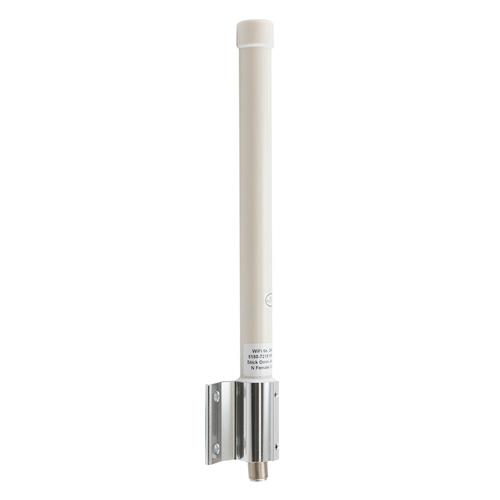
Wi-Fi 6 is the ideal solution when high throughput is required for mobile assets within a controlled RF environment. Modern automotive assembly plants operating AGVs, mobile HMIs, and machine vision systems commonly deploy Wi-Fi 6 on the 5 GHz band with carefully planned access point placement.
Latency typically ranges from 2–20 ms depending on network load and proximity to access points. This is suitable for most logistics and monitoring applications but generally insufficient for motion control.
Wi-Fi 6E expands available spectrum by introducing the 6 GHz band, which remains relatively uncongested in industrial environments. For facilities struggling with crowded 2.4 GHz and 5 GHz frequencies, the additional investment in Wi-Fi 6E is often worthwhile.
2. LoRaWAN
LoRaWAN is designed for long-range, low-data-rate, battery-powered sensor networks. It is not a replacement for Wi-Fi—it addresses an entirely different application space.
Typical use cases include:
- Pipeline leak detection
- Tank level monitoring across large industrial sites
- Condition monitoring for remote assets
- Agricultural and utility sensing applications
Although data rates are limited to approximately 50 kbps, a single gateway can provide coverage across several kilometers, while battery-powered nodes can operate for years without replacement.
3. ISA100.11a and WirelessHART
ISA100.11a and WirelessHART are the dominant wireless standards in process industries such as oil and gas, chemicals, and water treatment.
Both operate in the 2.4 GHz ISM band and use frequency-hopping spread spectrum technology to improve resistance to interference.
WirelessHART offers backward compatibility with existing wired HART installations, making migration easier for facilities already utilizing HART-enabled field devices.
ISA100.11a provides greater flexibility and functionality but generally requires more configuration effort.
Both technologies are specifically designed for mission-critical industrial and safety-related environments.
2. How Does Industrial Ethernet Differ from Standard Ethernet?
Industrial Ethernet uses the same IEEE 802.3 physical layer as office networks, including the same Ethernet cabling principles, TCP/IP protocols, and often RJ45 interfaces.
However, Industrial Ethernet adds three critical capabilities that standard office Ethernet cannot guarantee:
- Deterministic communication
- Ruggedized hardware
- Industrial automation protocol extensions
Determinism is the key differentiator.
When a control system instructs a servo drive to move at an exact moment, unpredictable delays of even a few milliseconds are unacceptable. Industrial Ethernet protocols address this challenge through technologies such as IEEE 1588 Precision Time Protocol (PTP), prioritized traffic scheduling, and dedicated communication cycles.
1. PROFINET
Developed by Siemens and maintained by PI (PROFIBUS & PROFINET International), PROFINET is the dominant Industrial Ethernet standard across European manufacturing sectors.
PROFINET IRT (Isochronous Real Time) supports:
- Cycle times below 1 ms
- Jitter below 1 μs
These capabilities make it suitable for highly synchronized automation systems.
2. EtherNet/IP
Managed by ODVA, EtherNet/IP is the preferred Industrial Ethernet protocol in North American discrete manufacturing environments and is widely used in Rockwell Automation (Allen-Bradley) systems.
EtherNet/IP runs the Common Industrial Protocol (CIP) over standard TCP/UDP/IP networks, allowing seamless integration with existing IT infrastructure without requiring specialized Ethernet switches.
3. EtherCAT
Developed by Beckhoff, EtherCAT is among the fastest Industrial Ethernet protocols available today.
Key performance characteristics include:
- Cycle times below 100 μs
- Extremely precise synchronization
- Efficient frame processing through each node
Rather than receiving and retransmitting Ethernet frames, EtherCAT devices process data in real time as frames pass through them.
This makes EtherCAT particularly suitable for:
- Multi-axis motion control
- Pick-and-place robotics
- Automated test systems
- High-speed manufacturing equipment
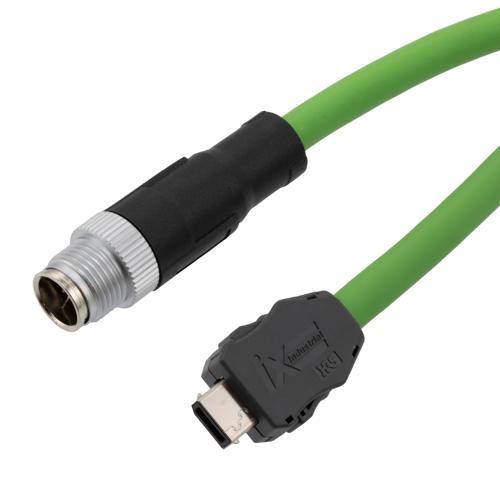
The supporting hardware ecosystem—including shielded industrial Ethernet cable assemblies, M12 industrial Ethernet connectors, and industrial PoE switches—is designed to withstand extreme temperatures, vibration, and demanding ingress protection requirements.
3. Quick Q&A
Q1: What is Industrial Ethernet, and how does it differ from standard Ethernet?
Industrial Ethernet utilizes the same IEEE 802.3 physical standards as commercial Ethernet but extends them with deterministic communication protocols such as PROFINET, EtherNet/IP, and EtherCAT, along with ruggedized connectors, broader temperature ratings, and higher ingress protection levels.
The most significant difference is guaranteed timing. Industrial Ethernet can achieve sub-millisecond cycle times with microsecond-level jitter, which conventional Ethernet cannot reliably provide.
Q2: Can industrial wireless replace Industrial Ethernet for motion control?
Not yet for hard real-time motion control applications.
The most advanced wireless options, including private 5G deployments with URLLC configurations, can achieve latency between 1 and 5 milliseconds. However, certified implementations for safety-critical motion control are still limited.
Wireless technologies are suitable for:
- Conveyor I/O
- Monitoring systems
- Non-safety-critical automation
For synchronized servo control, wired Industrial Ethernet remains the preferred solution.
Q3: Which industrial wireless technology provides the greatest coverage?
LoRaWAN offers the widest coverage range.
Typical performance includes:
- More than 15 km in open outdoor environments
- Approximately 2–5 km in industrial facilities with obstacles
This makes LoRaWAN ideal for:
- Pipeline monitoring
- Utility metering
- Agricultural sensing
- Large-scale industrial monitoring
ISA100.11a and WirelessHART use mesh networking architectures that extend coverage through node-to-node communication, typically achieving approximately 300 meters per hop.
Q4: Are hybrid wired and wireless networks more difficult to secure?
They require additional attention but not necessarily greater cost.
Best practices include:
- Treating wireless segments as untrusted networks
- VLAN segmentation
- WPA3-Enterprise authentication
- Rogue access point detection
Many modern industrial switches support these security capabilities natively, eliminating the need for separate security appliances in well-designed deployments.
Q5: What should be evaluated first when selecting a connectivity technology?
Start by asking whether the asset moves during operation.
- If mobility is required, wireless will almost certainly be part of the solution.
- If mobility is not required, determine whether the application needs deterministic timing below 5 milliseconds.
If it does, Industrial Ethernet is typically the safest choice.
All other considerations—including range, bandwidth, and cost—are secondary to these two fundamental questions.
Conclusion
Softel supports Industrial Internet of Things (IIoT) infrastructure through rugged connectivity solutions engineered for demanding industrial environments. From industrial Ethernet components and reinforced fiber-optic cabling to edge networking support, Softel helps organizations build reliable physical-layer networks that ensure the long-term stability, performance, and scalability of industrial systems.
Post time: Jun-11-2026